









 :
:

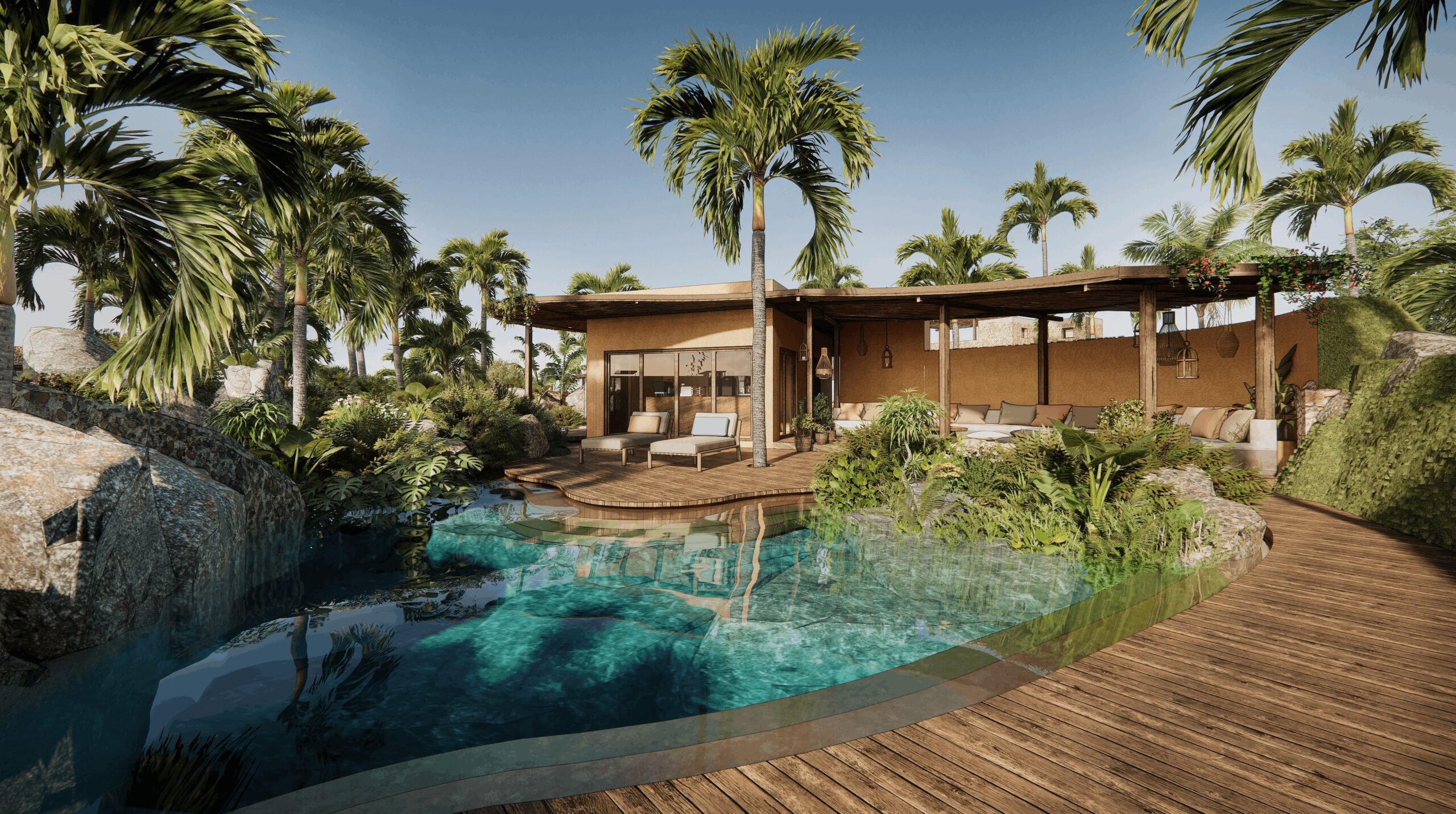
[Sponsored] Discover Liyongo, a 60-villa resort in Zanzibar designed by Christopher Nash and Victor Delo to integrate community, local design, and sustainable ownership.
When Christopher Nash first arrived in Kendwa in 2021, he noticed a pattern in Zanzibar’s hospitality development: beachfront resorts were charging several hundred dollars a night, often separated from the village next door, while the community that made the place worth visiting saw relatively little of that tourism economy.
Hotels had little sense of Kendwa itself. The same materials, the same palette, the same photography. A resort that could be anywhere with blue water and white sand is, in a sense, nowhere.
Nash wanted to create something different: a place where visitors could experience more of the culture they were visiting, while the surrounding community could benefit from the development.
He was joined by Victor Delo, his brother-in-law and co-founder, who is Zanzibari. Together, they brought a local understanding of the market alongside an international perspective on what buyers and guests expect. They assembled a wider team around that principle, with decades of experience in Zanzibar and East African hospitality and real estate.
They created Liyongo – 60 leasehold villas within a hospitality resort on Zanzibar’s north-west coast, with off-plan sales opening this October. From the outset, their goal was very clear: to build a project that would grow alongside Kendwa, rather than simply sit next to its coast.
A model built for the distance
Before they could make the development look and feel like Kendwa, they had to make sure it would work in Kendwa’s legal and economic context.
The villas would be sold to private buyers, many of whom would live thousands of miles away. The model therefore needed to offer a secure and reliable investment that could also be managed from a distance. The solution: individual ownership, centralised operations.
Each villa carries an individual title under Zanzibar’s Condominium Act, with foreign ownership structured through a 99-year lease, renewable through 33-year terms. What an owner holds is their own villa, rather than a fund unit or company share.
After handover, owners have three weeks each year to use their villa. For the rest of the year, villas can be made available for guest bookings, with Liyongo’s experienced team taking care of the entire process, from marketing and reservations to property maintenance. Rental income is pooled and distributed to owners according to a defined formula, paid quarterly and reported transparently.
For the owner, that means having an individually titled property without taking on the day-to-day responsibilities of operating a resort in a market they may know little about. For the guest, it means a seamless holiday experience within a professionally managed resort.
A building that belongs to its surroundings
The masterplan takes its cues from Kendwa, with villas arranged around shared courtyards and pedestrian paths rather than a conventional resort compound. Landscape and architecture are designed to flow into one another.
The same approach carries through to the materials and construction: coral stone walls, makuti roofs, local timber and lime render mixed with crushed coral. The 400mm-thick walls provide thermal mass, while the villas are oriented towards the prevailing breeze, with deep eaves for shade and openings on both sides to encourage cross-ventilation.
The result is architecture shaped by its surroundings, using local materials and passive cooling to respond to the landscape and climate, allowing guests to experience Kendwa and its natural environment beyond the beach.
A village is its people
Kendwa is not an empty site waiting for a resort. It is a working village with its own economy, leadership and traditions. Yet the people who live there are often disconnected from the thriving tourism industry around them, creating two separate economies within the same place.
Liyongo does not intend to mend that rift through one-time solutions. Instead, it works with the local community to identify the needs and build solutions into the project itself. A partnership was forged with the village’s Sheha, its local leader, to shape community initiatives from the outset. These include freshwater wells, school equipment and educational support for local teachers, training and employment pathways for Zanzibaris, and community clean-up initiatives.
There is also the founder’s passion project: the artisan market. Nash, who has a background in art history, included market stalls for local makers and producers in the masterplan, alongside workshops and craft demonstrations.
The intention is to give artisans a place to sell their own work and allow guests to encounter it where it is made, rather than presenting local culture as something separate from everyday life. Locals can share their culture firsthand while creating a stable source of income, and guests can experience more of Kendwa authentically.
Sixty villas. Sixty owners. One Kendwa.
Off-plan sales open in October, villa by villa, with handover targeted for 2028.
Liyongo brings together private ownership and hotel operation in a single development: sixty individually owned villas, managed collectively as one hospitality business and built around the character of Kendwa.
The aim was never simply to build a resort in Kendwa, but to build one that belongs there.