









 :
:

Olaf Gröger, director at Hyphen, explores why office-to-hotel conversions are becoming Europe’s next hospitality opportunity.
Office to hotel conversions are becoming one of the biggest opportunities in hospitality growth right now. With more than three million square feet of office space reportedly acquired for potential hotel conversion in the past two years, the evolving trend to transform high-grade commercial building stock continues to grow at pace.
What is behind this shift?
With hotel stays returning to pre-pandemic levels and hybrid working and office requirements constantly changing, the real estate landscape was bound to adjust accordingly.
Across UK real estate markets, investor attention is shifting toward property types with resilient operations that comply with carbon and energy regulations and offer varied income sources and lasting relevance as cities continue to change.
With work, leisure and travel continuing to blend, the gap between hotel and office is narrowing. This shift has been reinforced by the rise of the mixed-use city centre, where residential, dining and business uses increasingly coexist, making the ability to adapt existing buildings an attractive proposition for owners and occupiers alike.
Existing buildings can often create stronger guest experiences, with guests gravitating towards hotels with unique character or giving them access to prime locations. Take The Ned in London, originally Midland Bank Headquarters, or The Corinthia, used previously as government offices – both iconic hotels that were originally offices.
The shift to adaptive reuse also means reduced development risk, quicker delivery timelines, stronger commercial returns, and a lower carbon impact compared to new builds.
The bigger picture
Financial viability of office to hotel conversions still comes down to location. Cities like Amsterdam, Barcelona and London will always have that instant pull factor for visitors. You can guarantee footfall, room occupancy, high levels of tourism, and significant business bases. Secondary cities offer a different equation entirely, and that difference should not be forgotten.
Planning is another major variable. Most local authorities are increasingly commercially minded and receptive to the ESG case for reuse, but receptive doesn’t mean fast. Timelines can still stretch, and few projects get through without at least one curveball along the way.
And underpinning all of it should be a net-zero lens. Adaptive reuse is, at its core, an act of carbon conservation. Every decision should reflect the fact that you’re not just repurposing a building as a vanity project, you’re making the case for reuse over demolition in the first place.
The practicalities of office to hotel conversion
American office stock, as a comparison, is dominated by deep 1980s and 90s floor plates, built for open-plan efficiency at a scale that rarely suits a hotel room.
Europe’s inheritance is older and narrower – pre-war commercial buildings, midcentury blocks with perimeter offices and daylight-filled layouts that, in most cases, are a genuine advantage for hotel conversion. However, uneven ceiling heights and irregular structure grids, common in older office buildings, can mean that services such as air conditioning, plumbing and electricals can be more difficult to integrate and distribute effectively.
A crucial consideration during the retrofitting process is to ensure back-of-house space and services are designed first, including the service core. Without laundry services, loading docks, housekeeping storage, and staff routes, you don’t have a hotel.
These buildings were never planned with a hotel’s operational spine in mind, and retrofitting one after may cost more than designing it from scratch, depending on building age and condition. A guest may never notice a badly planned back-of-house, but the operator and staff will feel it.
A balanced perspective
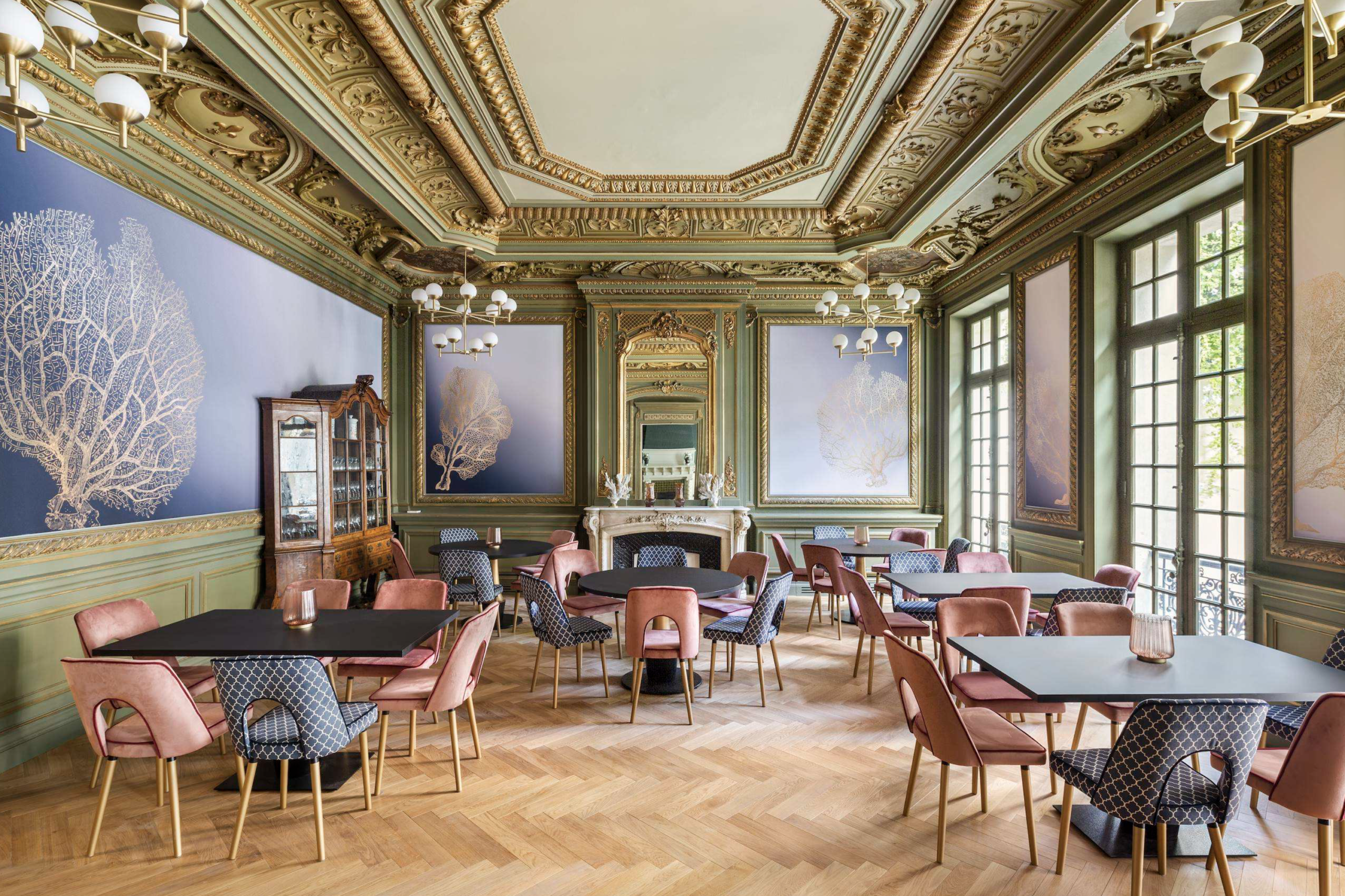
Some developers and architects see heritage features as limitation or frustration, but the best and most memorable retrofits are those that have weaved or amplified them within the structure and during renovation. The guest experience is often shaped by the buildings we stay in, and small nods to a building’s past provides the type of character visitors like to experience.
While location will always shape the financial viability of a hotel, planning pace needs to be taken into consideration, and it should not be assumed this will move quickly because an authority is on board with reuse in principle. The hotels that perform the best operationally are the ones where back-of-house is planned and budgeted for properly from day one, not squeezed in as an afterthought.
The strongest projects demonstrating long-term value all have one thing in common – heritage wasn’t treated as a limitation to design around, it became part of the commercial offering. As more office stock floods the Europe market, returns will depend on getting the fundamentals right from the start and picking a team that has experience of successful adaptive reuse projects and a focus on commercial and operational intelligence, as well as design is essential.