








 :
:

[Sponsored] Discover how boutique hotels use smart room systems to automate in-room controls, improve efficiency, and deliver personalised experiences.
In 2026, most smart hotel technology investments are made in the guest room. A modern hotel room management system (the software and devices that control lighting, temperature, room access, entertainment, and in-room service requests) has moved from a luxury chain to boutique properties that need to do more with fewer staff.
This guide explains what the hotel room technology does, why it matters specifically for boutique and independent hotels, and the trends shaping it in 2026.
What is a hotel room management system?
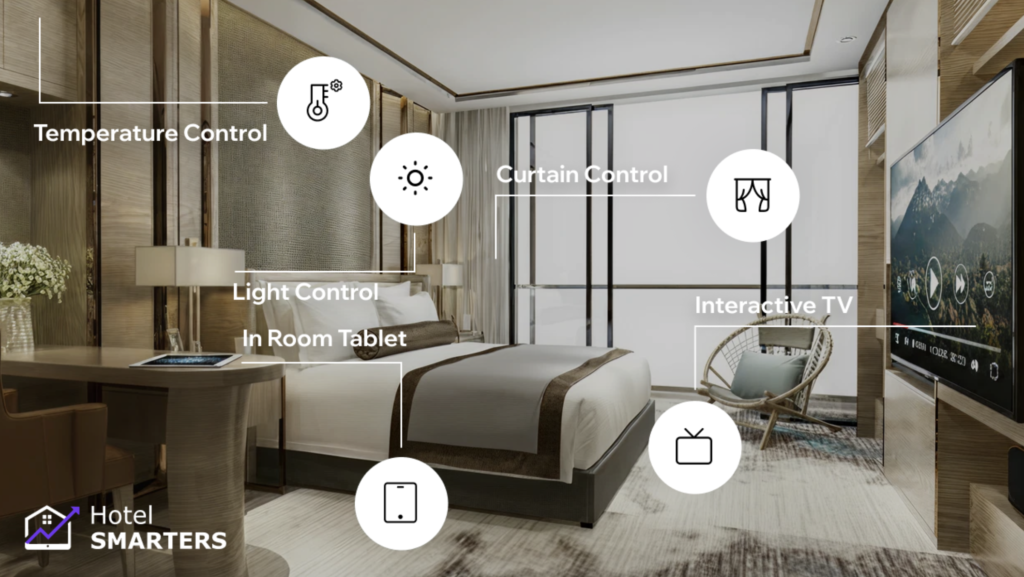
A hotel room management system (often called a guest room management system, or GRMS) is an integrated platform that automates and controls in-room functions:
- Lighting
- Air conditioning
- Curtains and shades
- Door access
- In-room entertainment, -guest-service requests such as “do not disturb” and “make up room”
It typically connects to the property management system (PMS) so the room reacts automatically to check-in, check-out, and occupancy status.
The purpose is threefold: a more comfortable, personalised stay; lower energy and operating costs; and smoother operations for a small team.
Why room control matters for boutique hotels?
Boutique hotels were historically slower than the big chains to adopt room technology, precisely because personal, human service was their differentiator. That has changed.
A new generation of independent hotels now sees automation as a way to free staff from routine tasks. This allows them to focus on the high-touch moments that define a boutique property.
The biggest benefit is reducing labour costs. Per the American Hotel & Lodging Association’s February 2025 survey with Hireology, 65 per cent of hotels still report staffing shortages, with 71 per cent unable to fill open roles and housekeeping (38 per cent) and front-desk (26 per cent) the hardest positions to staff.
Self-service and automation can reduce front-desk workload with the help of branded guest apps. For a boutique hotel running a lean team, hotel technology that lets five people comfortably do the work of eight is possible.
Next one, guest expectation. Boutique guests expect their stay to feel modern and effortless.
In a widely cited Oracle Hospitality–Skift study (which surveyed 5,266 consumers and 633 executives), 43 per cent of travellers said they want voice-activated controls for all in-room amenities, 25 per cent want rooms that auto-adjust temperature and lighting to pre-shared preferences, and nearly 73 per cent want to use their mobile device to manage their hotel experience. From check-in and checkout to payments and ordering.
The third driver is cost. Hotel technologies can help reduce energy waste by automatically adjusting room settings when guests are not present. For example, smart room systems can lower the heating or air conditioning, turn off unused lights, and switch devices into energy-saving mode when a room is empty. This helps hotels lower utility costs while still keeping rooms comfortable when guests return.
The 2026 trends shaping room management
AI and IoT smart rooms. Hotels can use smart sensors to tell when a room is occupied or empty. These sensors work with hotel systems to automatically adjust lighting, temperature, and other room settings, helping reduce unnecessary energy use. Some advanced systems can also spot signs of equipment problems early, allowing staff to fix them before they affect the guest experience.
Energy management as ROI. California’s Title 24 CASE Report on Guest Room Occupancy Controls documented nearly 48 per cent lighting savings, 43 per cent heating and cooling savings, and 44 per cent total energy savings in controlled guest rooms.
Payback is fast: Telkonet reports its EcoSmart system is projected to reduce HVAC energy consumption by up to 40 per cent, yielding payback in as little as 18 months.
Mobile keys and contactless arrival. Keyless entry has become a near-standard expectation. This includes delivering smartphone room access, reduced front-desk friction, and savings on lost keycards. Web-based mobile keys (a secure link, no app download) are winning adoption at boutique properties because they remove the friction of asking guests to install an app for a single stay.
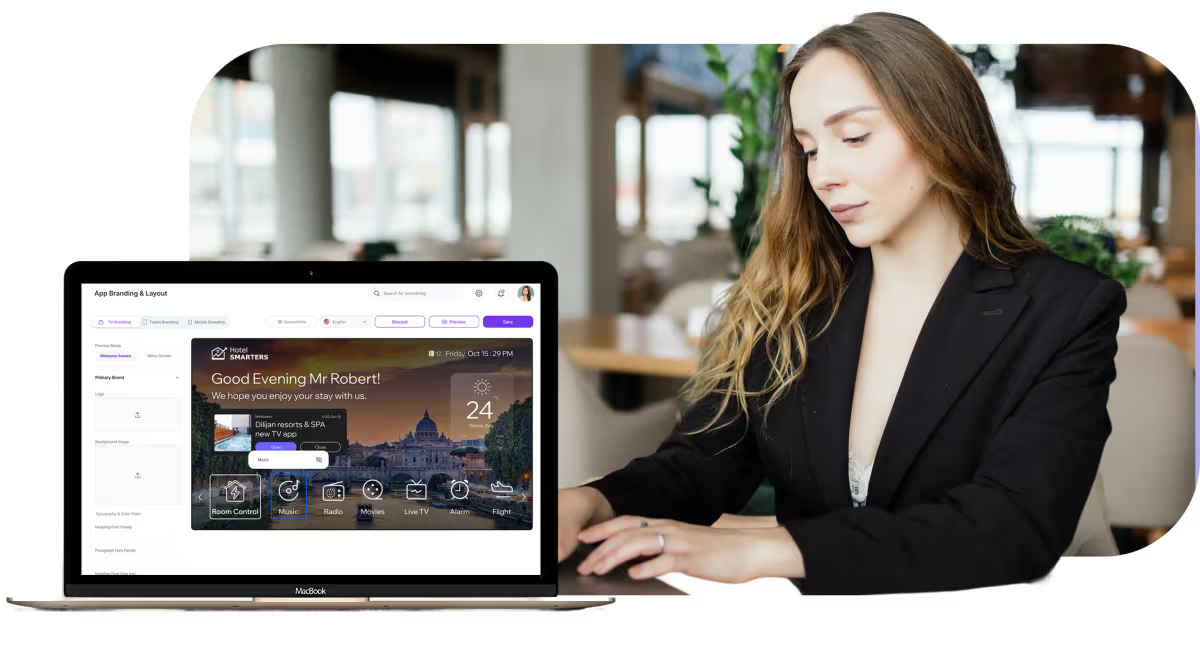
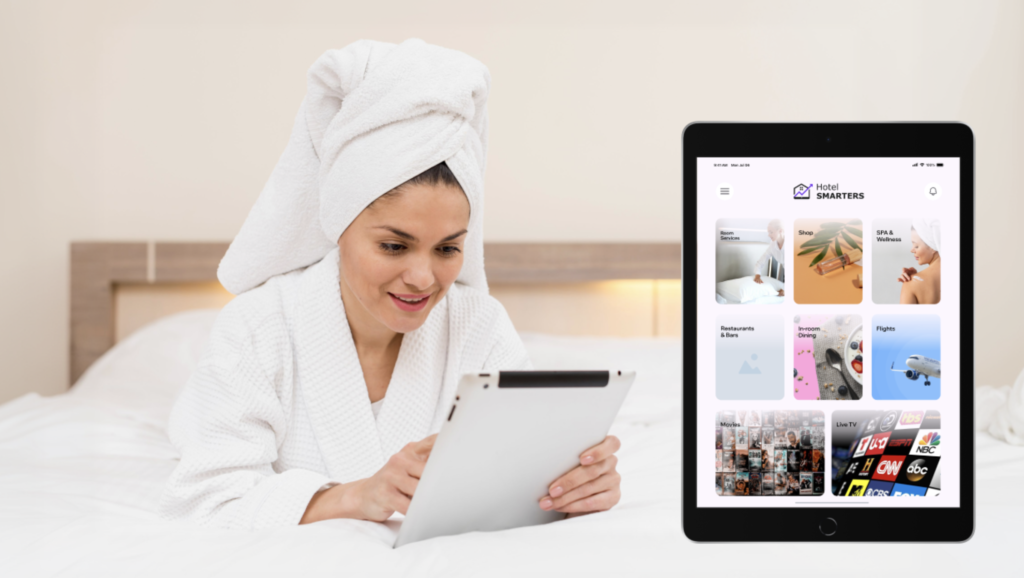
In-room tablets. A hotel in-room tablet gives guests quick access to room service, housekeeping requests, hotel information, restaurant menus, and room controls without needing to call the front desk.
PMS integration and open APIs. The winning properties connect their systems. Cloud, API-first PMS platforms make a boutique-friendly “best-of-breed” stack possible.
Sustainability and personalization. Guests mostly favour visible sustainability efforts, and the same systems that save energy also enable the paperless, personalised touches modern travellers expect.
What the results look like
The numbers from real boutique deployments are persuasive. At Gild Hall, a boutique Thompson hotel in Lower Manhattan, the Telkonet EcoSmart energy management platform delivered $46,000 in annual savings — $184,000 total over four years, per Telkonet’s case study.
At the 121-room Kimpton Alexis in Seattle, Volara-powered Amazon Echo devices saved staff over 40 hours each month. As assistant general manager Jenn Gile put it, the time saved has enabled the team to focus on higher-value, distinctly human engagement with guests.
Smaller independents see it too. Sandy Wieber, owner of the 30-room Bayfront Marin House in St. Augustine, Florida, adopted the Angie by Nomadix voice concierge to eliminate dozens of daily touch points without sacrificing the property’s welcoming, personalized service.
Practical considerations for boutique owners
Cost and ROI. Costs vary widely by ambition. Lead with the highest-ROI layer first — energy management — which typically pays back fastest, then expand into guest-facing features.
Ease of implementation. Wireless, retrofit-friendly systems can be installed room by room with minimal downtime. This is critical for historic boutique buildings where rewiring is impractical.
Guest privacy. For voice and data, choose hospitality-grade vendors that anonymise data, delete recordings promptly, and offer an opt-out.
Choosing vendors. Favour suppliers with hospitality references, strong support, and a modular path so you can start small and grow.
Ready to get your own hotel room technology?
For boutique hotels, a hotel room management system helps meet guest expectations. Start with energy management for higher ROI with vendors like Verdant, layer in keyless entry with Chekin, and guest-facing controls like HotelSmarters.
If you treat room technology as part of your staffing and brand strategy — rather than a nice-to-have — you will be the ones who thrive.